
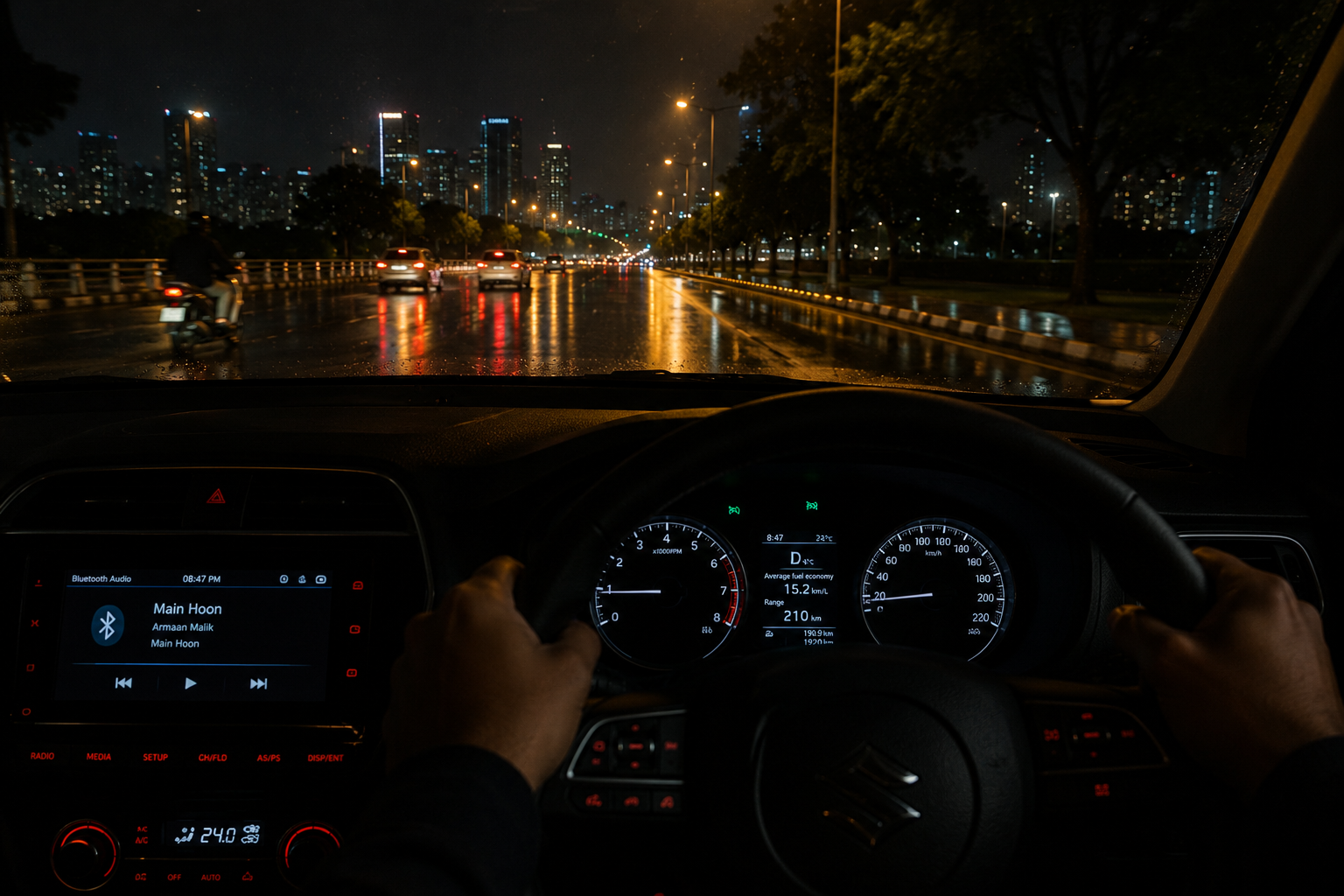

Here are the night driving tips we teach our students, so that driving after dark feels controlled rather than stressful.
Make Sure You Can Be Seen and Can See
Before you set off at night, check that all your lights work: headlights, tail lights, indicators and brake lights. Clean your windscreen inside and out, because a dirty screen scatters light and worsens glare. A clear screen and working lights are the foundation of safe night driving, and they take only a moment to check.
Use Your Headlights Correctly
Use your low beam in traffic and on lit roads, and switch to high beam only on dark, empty stretches where you will not dazzle other drivers. The moment an oncoming vehicle appears, dip back to low beam. Blinding another driver, even briefly, is dangerous for everyone. Getting this habit right is one of the clearest marks of a considerate, safe night driver.
Handle Oncoming Glare the Right Way
When an oncoming vehicle has its high beams on, do not stare into the light. Instead, shift your gaze slightly to the left edge of your lane and use the road markings to guide you until the vehicle passes. Staring into headlights leaves you momentarily blind. Looking away keeps your eyes adjusted and your car on line.
Slow Down and Increase Your Following Distance
At night you can see less far ahead, so you have less time to react. The simple fix is to slow down and leave more distance between you and the vehicle in front. This gives you the extra seconds you need if something appears suddenly, whether it is a pedestrian, a stray animal, or an unlit two-wheeler, all common on Bengaluru roads after dark.
Watch for the Hazards That Hide at Night
Some hazards are far harder to spot after dark. Be especially alert for:
- Pedestrians crossing away from lit areas
- Cyclists and two-wheelers without proper lights
- Potholes and speed breakers that are hard to see
- Vehicles parked without lights on the roadside
Scanning actively, rather than just looking straight ahead, is what helps you catch these in time.
Keep Your Eyes Rested and Your Mind Alert
Night driving is more tiring than daytime driving. If you feel drowsy, do not push on. Pull over somewhere safe and rest. Fatigue slows your reactions as surely as anything else, and a tired driver is a dangerous one. Plan longer night journeys with breaks, and never drive if you are struggling to stay awake.
Practise Night Driving With Guidance First
The best way to get comfortable driving at night is to do it first with an experienced instructor beside you, who can point out hazards and correct your habits in real time. This is exactly the kind of real-world condition our simulator prepares you for before you experience it on the road, so the first time you drive in the dark, it is not a shock.
If night confidence is something you want to build properly, our Super Learner's Programme gives you extra practical hours precisely for situations like this, before you sit your RTO test.
Confidence Comes With Practice
Night driving feels intimidating at first, but like every driving skill, it becomes second nature with practice. Keep your car well maintained, use your lights considerately, slow down, stay alert, and give yourself room. Do that consistently, and driving after dark becomes just another part of driving, not something to dread.
Bengaluru does not stop moving when the sun goes down, and neither should your confidence. With the right habits, the night road is yours too.