

On Bengaluru's roads, where the unexpected is routine, defensive driving is not an advanced luxury. It is a core survival skill, and it is woven into everything we teach.
What Defensive Driving Actually Means
Defensive driving is a mindset and a set of habits built around one simple idea: assume that other road users may make mistakes, and position yourself to stay safe when they do. It is not about being timid or slow. It is about being aware, prepared and always leaving yourself a way out. A defensive driver is rarely surprised, because they see problems coming.
The Core Skills of Defensive Driving
Scanning ahead
Instead of staring at the car directly in front, a defensive driver looks well down the road, reading the traffic several vehicles ahead. This early warning gives you time to react smoothly to braking, merging or hazards long before they become emergencies.
Keeping a safe space around you
Maintaining distance from the vehicle ahead, and being aware of what is beside and behind you, gives you room to manoeuvre. Space is time, and time is what lets you avoid a collision rather than crash into one.
Anticipating other people's mistakes
A two-wheeler may cut across without signalling. A pedestrian may step out suddenly. A car may brake hard for a pothole. Defensive drivers expect these things, so they are never caught off guard when they happen.
Managing your own state
Fatigue, distraction and frustration all erode your ability to drive safely. A defensive driver knows to stay calm, avoid the phone, and pull over when tired. Much of safe driving is simply managing yourself.
Why It Matters So Much in Bengaluru
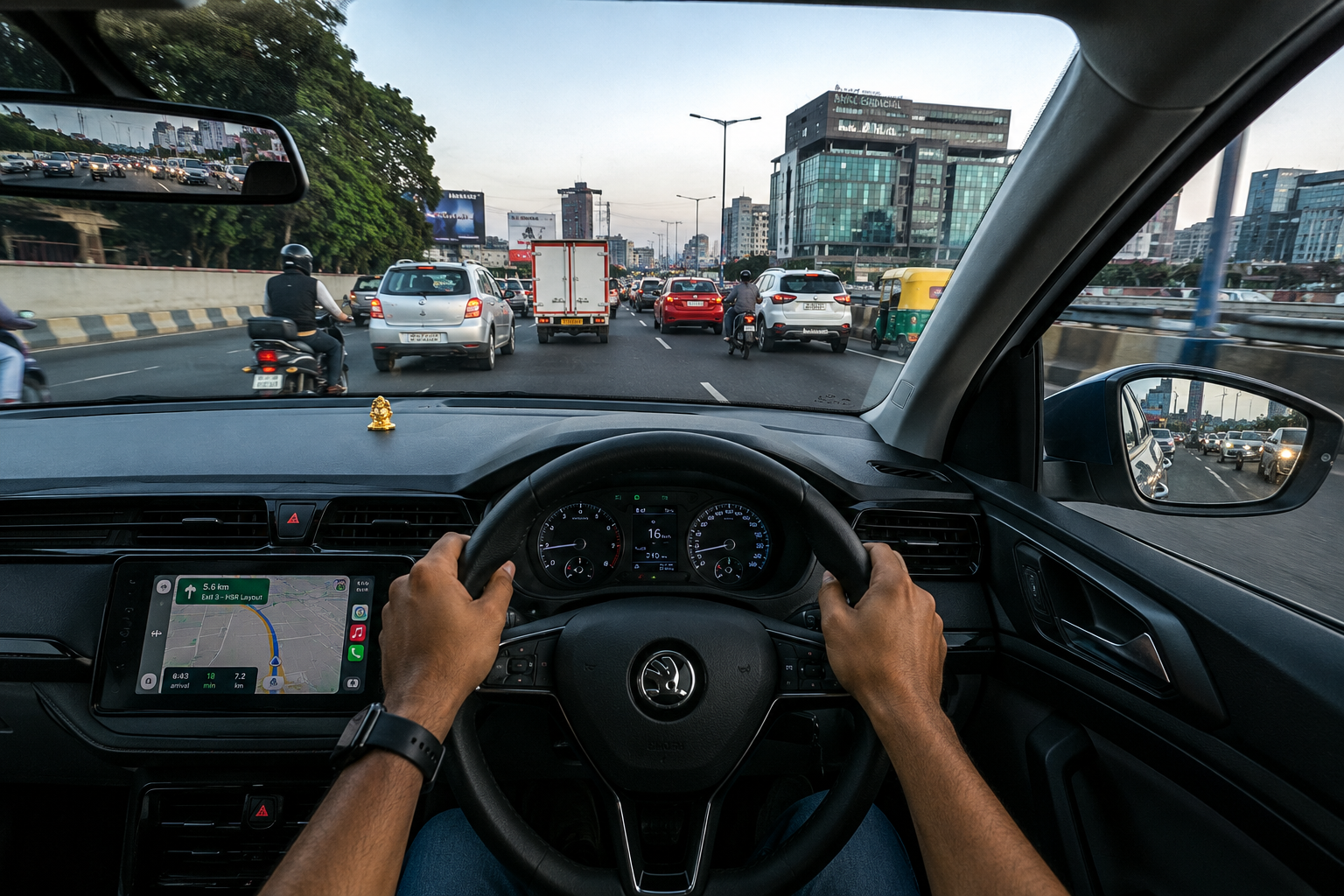
Bengaluru's roads combine dense traffic, a huge number of two-wheelers, unpredictable lane behaviour, sudden stops and frequent pedestrians. In this environment, simply following the rules is not always enough, because not everyone around you will. Defensive driving fills that gap. It is what keeps you safe when someone else does the wrong thing, which, on a busy day, is almost guaranteed.
The Two-Second Rule and Other Habits
Some defensive habits are easy to adopt straight away:
- Keep at least a two-second gap to the vehicle ahead, more in rain or at night
- Check your mirrors regularly so you always know what is around you
- Signal early and clearly so others can predict your moves
- Never assume another driver has seen you
- Have an escape route in mind, a space you could steer into if you had to
None of these are difficult. Practised consistently, they dramatically lower your risk on every single drive.
Defensive Driving Is a Habit, Not a Class
At Infinity Driving School, defensive driving is not a separate add-on. It is a mindset our instructors build into every lesson, from your first day on the simulator to your final drives on busy city roads. We want you to leave not just with a licence, but with the instincts that keep you safe for life. That is the real measure of good driver training.
If you want to sharpen these instincts specifically, our Defensive Driving training focuses on hazard awareness and safe habits for Bengaluru's unique conditions.
Safe for the Test, Safe for Life
Passing your RTO test is a milestone, but it is the beginning of your driving life, not the end. The habits you build now are the ones you will carry for decades. Choose to become a defensive driver from the start, and you give yourself the best possible protection on every road you will ever drive.
Driving safely is not about luck. It is about awareness, preparation and good habits, practised until they are automatic. That is what defensive driving gives you, and it is worth far more than a certificate.