
Blog details
14
Mar 2024
Defensive Driving: Why It Matters More Than You Think
Most driving instruction focuses on the mechanics of operating a vehicle — how to steer, brake, and change gears. But the skill that actually keeps you safe year after year is defensive driving. Defensive driving is not about being timid on the road. It is about being constantly aware, anticipating potential hazards, and making decisions that protect you even when other drivers make mistakes.
What is Defensive Driving?
Defensive driving is a set of skills and mental habits that allow you to identify and respond to road hazards before they become dangerous situations. A defensive driver assumes that other drivers may behave unpredictably and always maintains enough space, speed, and awareness to react safely. It is the difference between a driver who reacts to accidents and one who prevents them.
The Two-Second Rule
Maintain at least a two-second gap between your vehicle and the one in front at all times in normal conditions. In rain, at night, or at high speed, extend this to four seconds. This gap gives you the reaction time to brake safely if the vehicle ahead stops suddenly. Tailgating eliminates this buffer entirely and is one of the leading causes of rear-end collisions.
Scanning the Road Ahead
Defensive drivers do not just look at the car directly in front of them. They scan 10 to 15 seconds ahead — watching for brake lights, junction activity, pedestrians stepping off the kerb, and vehicles merging from side roads. The earlier you spot a potential hazard, the more time you have to respond gently rather than in a panic.
Expect the Unexpected
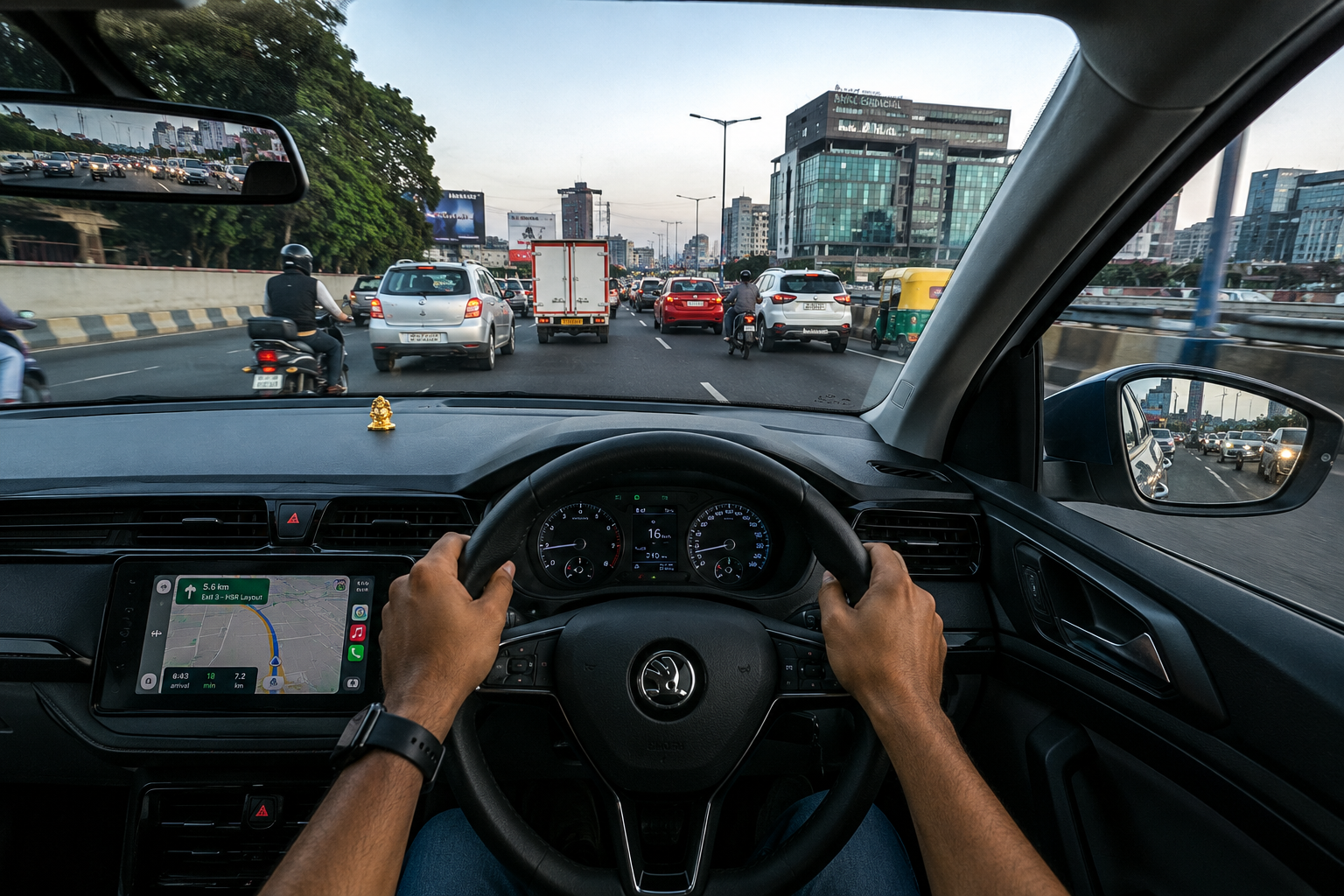
In Bangalore's traffic, expect two-wheelers to cut between lanes without signalling, pedestrians to cross at unmarked points, and vehicles to reverse out of driveways without checking. This is not pessimism — it is realism. A defensive driver mentally rehearses these scenarios and is not surprised when they happen. Surprise is what causes accidents; anticipation prevents them.
Managing Your Own State
Defensive driving also includes managing your own mental and physical state. Driving while angry, stressed, fatigued, or distracted makes you as unpredictable as the drivers you are trying to protect yourself from. Before getting behind the wheel, take a moment to check in with yourself. If you are not in a calm, alert state, delay the journey if at all possible.
Defensive Driving in Our Curriculum
At Infinity Driving School, defensive driving principles are woven into every lesson — not treated as a separate advanced topic. We believe that building these habits from day one creates drivers who are not just technically competent, but genuinely safe on the road for life.